Who is Herring Farmer?

WHO IS HERRING FARMER?
“I find it easier to write press releases when I’m not the subject/topic of them. I’m hardly a salesman and that self-promotion I once had in New Zealand kind of levelled out as I got older. But be that as it may, you might be wondering – what’s a Herring Farmer?”
“Around the time of the second lockdown, I had already experimented with electronic music with the DuhkQunt releases. But 2021 didn’t feel like there was too much to celebrate about. There was still a sense of isolation – not just through self-isolation either.”
“I was happy with how DuhkQunt worked out, and it seemed to be of interest to a few people; I didn’t envision a wave of interest initially because, for me, it was a creative outlet during the downtime of MUZAI Records. But I wanted to try something different, and I wanted to collaborate with some musicians that I enjoyed working with before that perhaps could add to the dynamic I had in mind.”
“Herring Farmer was initially a joke that my wife and I shared – let’s get some really lightweight recording equipment, get on a ferry to Norway and while taking in the scenic ride and the cold surroundings record a really simple noise EP. We never managed to get to Norway, nor a ferry.”
“But being resolute and having watched the fantastic movies Bait and The Lighthouse, I experimented more with sampling, pitch shifting, droney synths and even perhaps a few lyrics. But I don’t consider myself a singer at all.”
“Which is where Tim from Flogging A Dead One Horse Town came in. He had the tonality in his voice to portray the fisherman who’s slowly losing his grasp on reality. Tim’s vocals were better than I ever anticipated (and there was anticipation, believe me) and brought to life the whole concept of Maximum Sustainable Yield.”
“A local trawler-man, sailing out off the coast to once again try and earn a living while the bigger commercial fishing vessels were slowly nominalizing his livelihood; his very reason for being. Which I think a lot of people can relate to – that work/life balance where work becomes this all-consuming thing instead of a means for existence.”
“You work to live. You don’t live to work. Which was the problem this older protagonist, the Herring Farmer in question, faces as he finally loses his grip.”
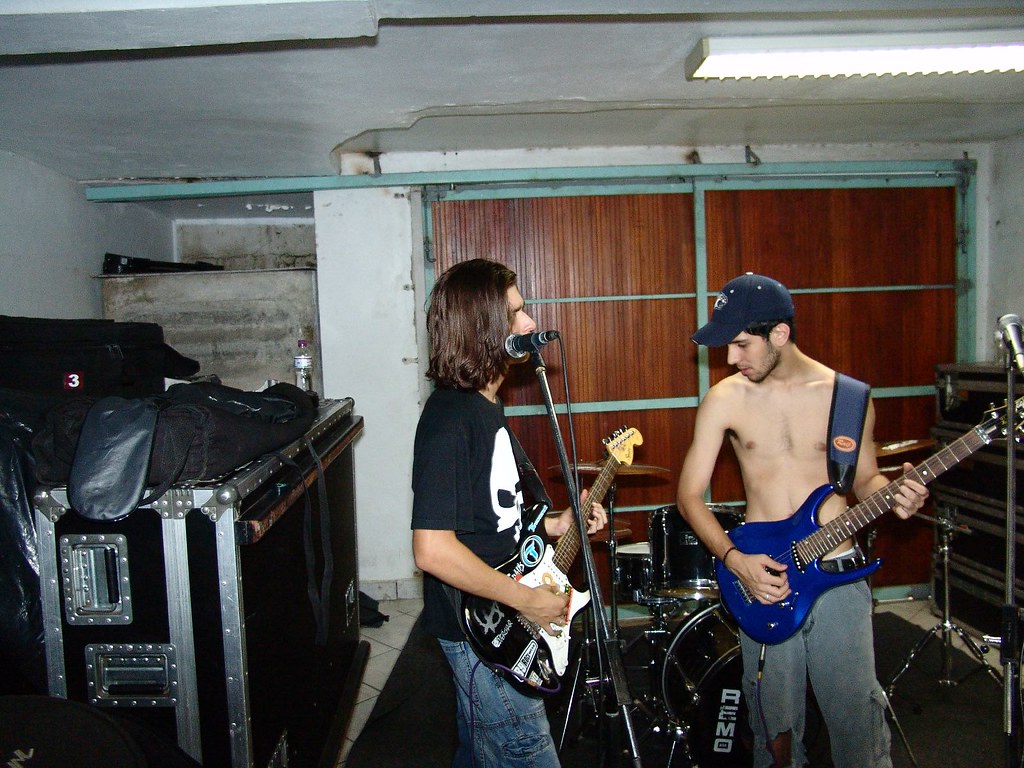
“Where P.B (King Shoji, Death Genesis) came in, was through his curiosity when I explained the ideas to him. He was an advocate of DuhkQunt and when he first listened to the single “Pushing Out To Sea” he really wanted to add his techno-organic charm to it.”
“Curating his machinery once again, P.B added a texture of dread to the proceedings. This project went from a couple of simple cut-and-paste works into this really ominous, John Carpenter-esque soundtrack for the concept.”
“That very single that led to the creation of the forthcoming EP, and empowered me to actually release it to everyone, rather than a couple of cassette tapes passed around and traded amongst friends. That really, gritty, fidelity-lost-with-each-generational-dub much like VHS traders became used to in the era of home video.”
“You can make an assumption yourself – the single is now streaming on MUZAI Records’ Soundcloud page, or wait until the full five tracks appear on April 1st 2022. I assure you this isn’t an elaborate, sardonic April Fools Joke.”
The Genesis of the Herring Farmer Concept
Before the moniker ever appeared on a tracklist, the idea of a herring farmer was little more than a private joke between two people who had spent too many evenings watching the sea swallow the light. The name itself is a deliberate absurdity: herring are wild fish, not livestock, and no one in their right mind would attempt to farm them in the traditional sense. Yet that contradiction is precisely the point. The Herring Farmer is a figure who tries to impose order on something that cannot be tamed, a man who believes that if he just works hard enough, the ocean will yield to his will.
That stubbornness is what makes the character so tragic. He is not a villain, nor is he a hero. He is simply a person who has confused persistence with purpose, and in doing so has lost sight of why he ever set out to sea in the first place. The project draws on a long tradition of maritime storytelling—from the bleak fatalism of Benjamin Britten’s Peter Grimes to the salt-crusted monologues of Robert Eggers’ The Lighthouse—but filters it through a distinctly modern anxiety: the feeling that your labour is no longer yours, that the systems you depend on are slowly erasing you.
Maximum Sustainable Yield: A Soundtrack for Slow Drowning
The forthcoming EP, Maximum Sustainable Yield, is not a concept album in the traditional sense. There is no overt narrative arc, no spoken-word interludes, no liner notes explaining what happens to the protagonist. Instead, the five tracks function as a series of emotional waypoints, each one capturing a different stage of the Herring Farmer’s unravelling. The music is deliberately claustrophobic: low-end drones that rumble like a hull scraping against rocks, tape hiss that suggests the constant presence of salt air, and synth lines that drift in and out of tune like a radio signal lost at sea.
What makes the EP so effective is its restraint. The arrangements are sparse, often built around a single repeating motif that slowly degrades over the course of a track. This is music that rewards patience, but it also punishes it—the longer you listen, the more you notice the cracks in the surface. It is the sonic equivalent of watching a boat take on water, one slow drip at a time.
Collaboration as a Form of Controlled Chaos
While the core of Herring Farmer is a solo endeavour, the project would not exist in its current form without the contributions of two key collaborators. Tim, from Flogging A Dead One Horse Town, provides the voice of the Herring Farmer himself—a performance that manages to be both weary and defiant, as if the character is still trying to convince himself that everything will be fine. His vocals are not polished, and that is exactly why they work. There is a rawness to them that cuts through the electronic textures, grounding the music in something recognisably human.
P.B, known for his work with King Shoji and Death Genesis, brings a different kind of energy to the project. His contributions are less about melody and more about atmosphere: layers of processed field recordings, industrial clanks, and sub-bass pulses that seem to come from somewhere beneath the listener’s feet. The result is a collaboration that feels less like a meeting of minds and more like a collision of weather systems—unpredictable, volatile, and strangely beautiful.
The Cassette Ethos and the Digital Release
There was a time when the Herring Farmer recordings were never intended to leave a small circle of friends. The original plan was to dub a handful of cassette tapes, each one slightly different from the last, and let them circulate like samizdat. In an age of infinite digital reproduction, there is something romantic about that idea: a piece of music that exists only as a physical object, passed from hand to hand, each copy degrading a little more with every playback.
Ultimately, the decision to release the EP digitally was a practical one. The music deserved a wider audience, and the cassette-only approach would have limited its reach to a few dozen people. But the spirit of that original idea remains. The tracks on Maximum Sustainable Yield are deliberately lo-fi, mixed to sound as if they have been dubbed and re-dubbed a hundred times. It is a nod to the VHS traders of the 1980s, who accepted picture degradation as part of the experience—a reminder that imperfection can be a form of authenticity.
What Comes Next for Herring Farmer
For now, the focus is on the release of Maximum Sustainable Yield on April 1st 2022. The single “Pushing Out To Sea” is already available on the MUZAI Records Soundcloud page, and it offers a strong indication of what to expect from the full EP. Those who have heard the complete record describe it as a slow descent, a journey into the kind of isolation that is both physical and psychological.
Whether Herring Farmer will continue beyond this release is an open question. The project was born out of a specific moment—a global pandemic, a collective sense of drift, a need to create something that felt true to that experience. But the themes it explores are timeless, and the character of the Herring Farmer is one that could easily return. For now, the only certainty is the music itself: five tracks, each one a small act of defiance against the tide.