STRUGGLES WITH SYNTAX – TICKY
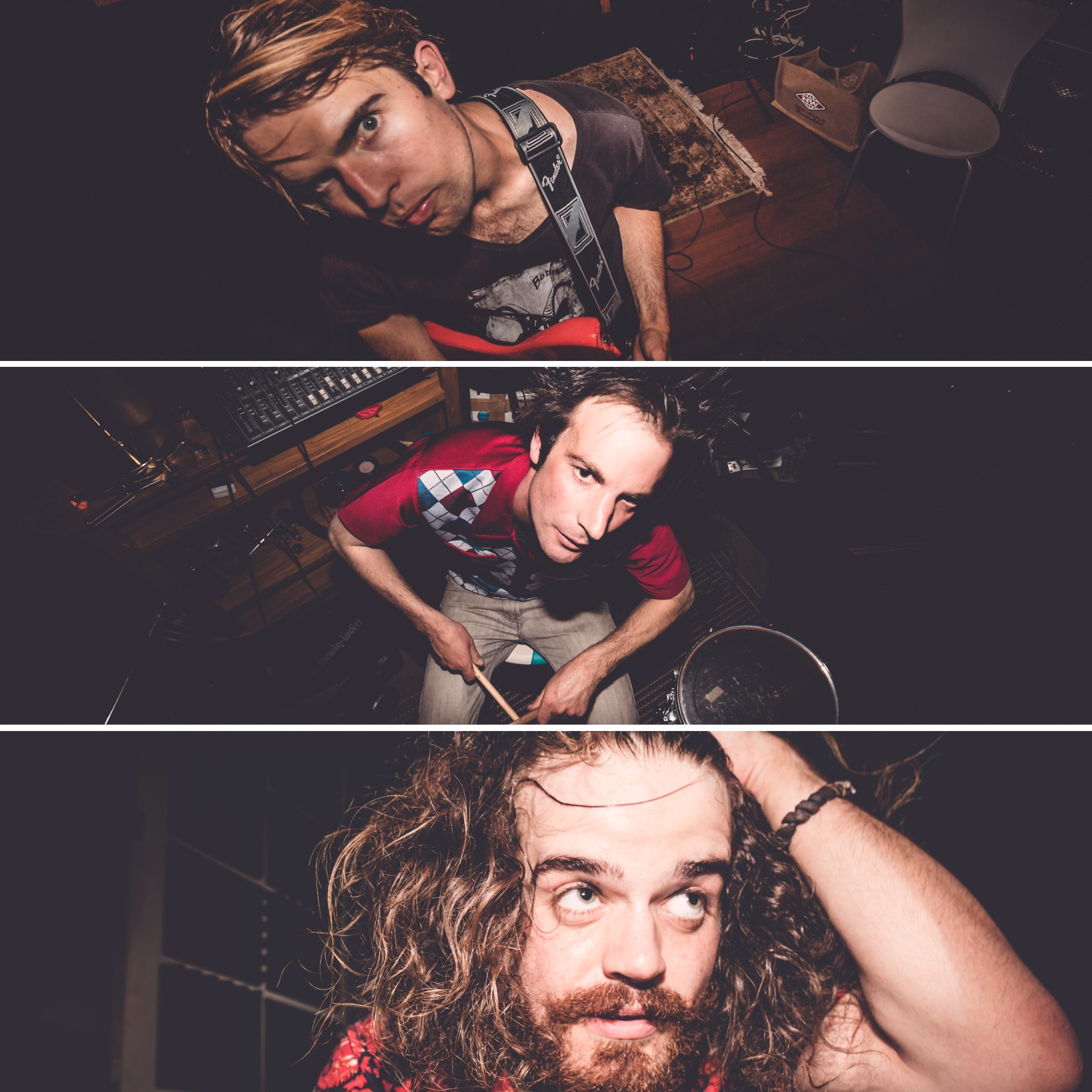
STRUGGLES WITH SYNTAX – TICKY
Christmas is just around the corner, which means it’s time to start thinking of those New Years’ resolutions after (hopefully) a festive meal; and those resolutions are usually to get fit and shed a few pounds (which you shouldn’t because you’re beautiful regardless of size.)
Struggles With Syntax ask though; why wait until then? Why not Workout With Syntax with the release of their latest music video, “Ticky.”
“The video was a mix of ideas from Ben” once-again editor Rory O’Connor explains, “and then built up with swerves and nudges from the rest of us. We wanted to make a sort of “anti-exercise” fitness video so everything is shot at half speed and then doubled up in the edit.”
“We definitely lean towards the abstract side of things. We want to present ourselves with a wry grin at things so there’s some absurdity in all the videos. Plus Jo’s lyrics are very abstract so at the back of my mind I’m always trying to present something that’s open to interpretation.”

With nine videos for the group in his portfolio, the self-confessed film and music video nerd looks to “recreate a visual idea or vibe from something I’ve seen, like aiming for a creepy Kubrick feel for “Jung Dreams” or visual juxtapositions in “Land Based Antics.””
With repeat support from Amazing Radio in the UK, and positive reviews so far for the band’s debut, it once again is their sardonic humor that becomes as much of a hook as their infectious verse riff.
The Genesis of "Ticky" and the Band's Creative Process
Struggles With Syntax have always been a band that thrives on collaboration and the unexpected. The concept for "Ticky" emerged from a casual conversation during a rehearsal break, when guitarist Ben started mimicking the jerky, repetitive movements of a clock's second hand. "It was one of those moments where everyone just started laughing, and then someone said, 'What if we made a video that's the opposite of a workout video?'" recalls vocalist Jo. "The idea stuck, and within a week we had a shot list."
The band's songwriting process is similarly organic. Jo typically brings in fragments of lyrics and vocal melodies, which the rest of the band then deconstructs and rebuilds. "I write in images rather than narratives," Jo explains. "So a song like 'Ticky' started with the phrase 'tick-tock, stop the clock' and grew from there. The music had to match that stuttering, anxious energy." Bassist Sam adds, "We'll loop a riff for twenty minutes, each of us changing one thing at a time until it feels like it could fall apart at any second. That tension is what we're after."

This approach has defined their sound since their early days playing in a converted warehouse in Manchester. The band members met through a local music collective, bonding over shared loves of post-punk, no wave, and early electronic music. "We never wanted to sound like anyone else," says drummer Mia. "We'd rather risk being weird than be boring."
The Anti-Exercise Video: Concept and Execution
The "Ticky" video is a masterclass in subverting expectations. Shot over two days in a rented community hall, the band members perform a series of deliberately awkward, half-speed exercises: slow-motion jumping jacks, lethargic lunges, and a particularly memorable sequence where Ben attempts to lift a foam dumbbell with exaggerated effort. "We wanted every movement to feel labored and pointless," director Rory O'Connor explains. "The irony is that making it look effortless was incredibly hard work."
The production relied on a mix of practical effects and clever editing. "We shot everything at 50 frames per second and then played it back at normal speed, which gives that unnerving, fluid-but-too-slow look," O'Connor says. "Then we'd cut to a close-up of someone's face looking exhausted, but with a deadpan expression. The contrast is what makes it funny." The color palette was kept deliberately drab—beige walls, grey tracksuits, harsh fluorescent lighting—to evoke the soullessness of a 1980s corporate fitness video.
One of the most discussed moments in the video is the "sweat montage," where the band members are shown dabbing their foreheads with towels in perfect synchronization, only to reveal that the towels are completely dry. "That was Jo's idea," Sam laughs. "She said, 'What if we're pretending to sweat but there's no actual sweat?' It's such a simple joke, but it sums up the whole video: the performance of effort without any real exertion."

Lyrical Abstraction and Interpretive Openness
Jo's lyrics for "Ticky" are characteristically oblique, blending images of time, anxiety, and bodily discomfort. Lines like "the second hand is a metronome for my spine" and "I sweat in semiquavers" resist easy interpretation, but Jo insists that's the point. "I want listeners to project their own meanings onto the words," she says. "If I told you exactly what it's about, it would close off all the other possibilities. The abstraction is a gift to the audience."
Critics have noted the song's thematic resonance with modern life's relentless pace. "There's a sense of being trapped in a loop, of time moving too fast or too slow depending on your anxiety level," one reviewer wrote. The band acknowledges this reading but stops short of endorsing it. "We're not trying to make a political statement," Ben says. "But if someone listens to 'Ticky' and feels seen, that's wonderful. Art should be a mirror, not a lecture."
The band's commitment to ambiguity extends to their live performances, where they often project abstract visuals and rearrange songs to the point of near-unrecognizability. "We've played 'Ticky' as a slow, dirge-like ballad and as a frantic punk burst," Mia says. "The core of the song is strong enough to survive any interpretation. That's how we know it's good."
Visual Influences and the Kubrick Connection
Rory O'Connor's visual style for Struggles With Syntax draws from a wide range of cinematic influences, from the symmetrical compositions of Wes Anderson to the unsettling long takes of Stanley Kubrick. "Kubrick is a huge touchstone for me," O'Connor admits. "There's a coldness and precision in his work that I find really inspiring. For 'Jung Dreams,' I tried to recreate that sense of clinical detachment, where the camera just observes without judgment."
For "Ticky," however, O'Connor looked to a different source: the deadpan comedy of early Jim Jarmusch and the absurdist physicality of Jacques Tati. "I wanted the humor to come from the characters' complete lack of self-awareness," he explains. "They're doing these ridiculous exercises with total seriousness, and that's what makes it funny. It's not a parody; it's a straight-faced presentation of something inherently absurd."
The band's previous videos have explored similar themes of alienation and performance. "Land Based Antics" juxtaposed shots of the band playing in a pristine studio with footage of them struggling to set up equipment in a muddy field, while "Jung Dreams" used slow zooms and symmetrical framing to create a sense of unease. "We always try to find the weird angle," Jo says. "Life is strange, and our videos should reflect that."
Reception and the Band's Growing Reputation
Since the release of "Ticky," Struggles With Syntax have seen a notable uptick in attention. The video was featured on several independent music blogs, with one describing it as "a much-needed antidote to the polished, overly serious music videos that dominate the scene." Amazing Radio in the UK has continued to champion the band, adding "Ticky" to their regular rotation and inviting the band for a live session.
The band's debut album, which includes "Ticky," has received positive reviews for its inventive arrangements and lyrical depth. Critics have praised the band's ability to balance humor with genuine emotional resonance. "Struggles With Syntax make music that's both clever and heartfelt," one review noted. "They never let the jokes overshadow the songs' underlying vulnerability."
For the band, this growing recognition is gratifying but not the ultimate goal. "We make music because we have to," Sam says. "If people connect with it, that's a bonus. But we'd be doing this even if no one was listening. The process is the point." As they prepare for a series of live shows and begin writing new material, Struggles With Syntax remain committed to their idiosyncratic vision—one that continues to challenge, amuse, and inspire.