DUHKQUNT – WEST MANSION
DUHKQUNT – WEST MANSION
Idle hands are the devil’s tools, so the saying goes. So what does one do when they’re currently living in lock-down during a pandemic when the video games become boring and the daily 30 minute exercise has been completed?
They look like they decide to make cut and paste electronica – or “jerkwave”, as MUZAI Records once again gets creative how to describe music. For DuhkQunt, it’s a descriptor that works.
Given the cut and paste nature of their forthcoming EP, simply called DuhkQunt, there is a jerky quality to the sound; akin to a well worn VHS tape that’s undergoing some tracking in a VCR.
“West Mansion”, the first single released today, was pulled together one bored evening playing around with a Google Play app (Groovepad – credit where credit is due) and influenced Namco classic Splatterhouse. It became the nucleus for DuhkQunt to tick the box on their personal goal list – make an EP.
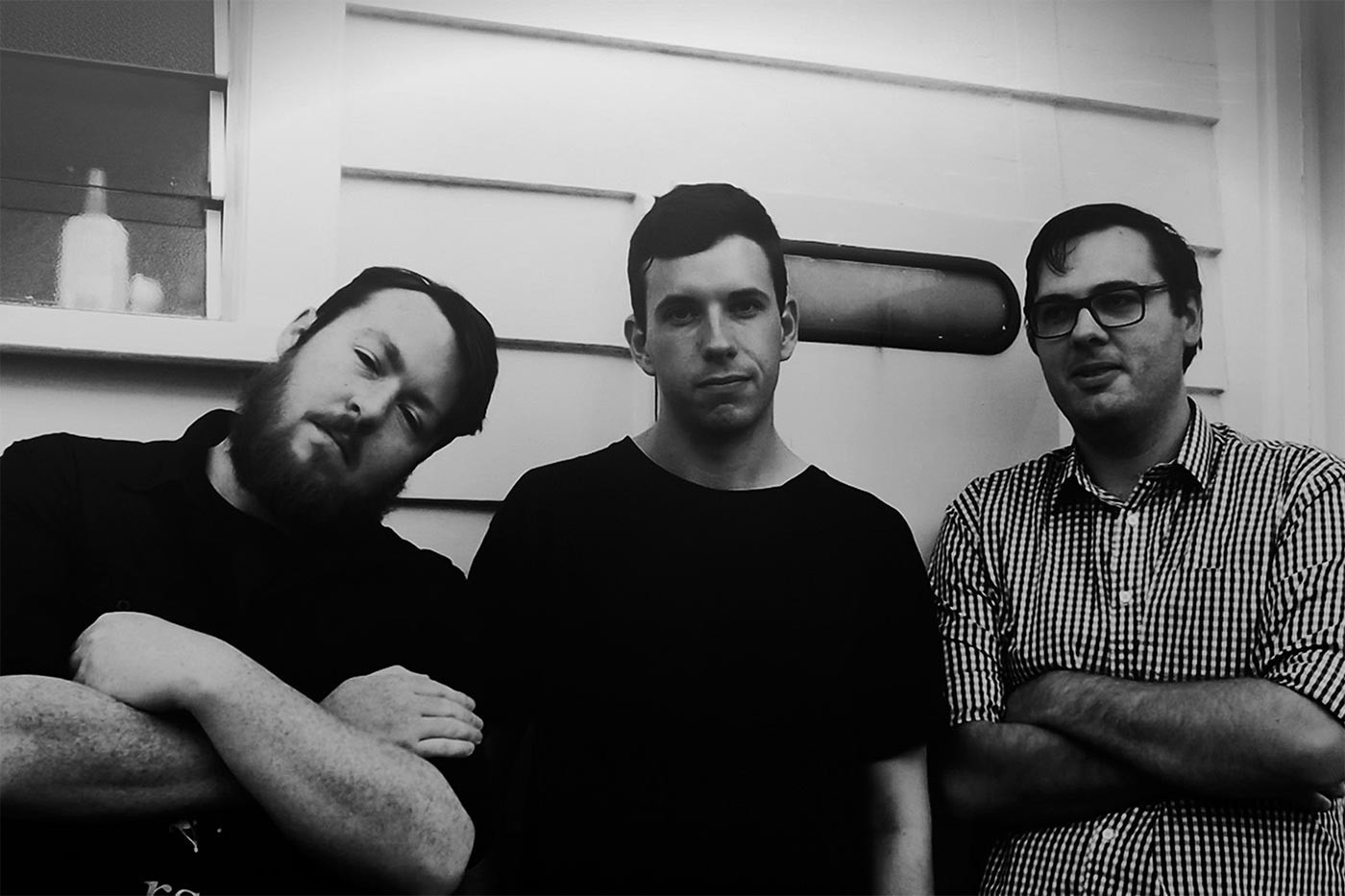
By their own admission, the whole affair sounds sloppily put together, but the point of an EP is to experiment with sounds and what works and what doesn’t. Right?
Having grown weary of staring at a mobile phone screen, the collective then moved to use iMac”s and sourcing samples from different areas – anime, Paddy Considine, Hideo Kojima – and piled everything into four tracks that share some similarities and yet different enough that the listener doesn’t feel like they’re listening to the same song four times in a row.
DuhkQunt aren’t astute enough to go “all in” with culture hacking; they’re not creating plunderphonics and aren’t going to change the world with sound collages. They are not Negativland, John Oswald or Cassetteboy.
But they are influenced in part by DJ Yoda, Front Line Assembly and an unhealthy diet of popular culture.
Everyone stars somewhere. DuhkQunt start here – DMCA requests to . No doubt they’ll get them.
SoundCloud embed for those who aren’t on the Bandcamp buzz (for shame.)
Recent Posts
Colonel Troutman is an enigma; whether that is intentional due to his background or perhaps a little put off by the idea of people actively engaging him. To be fair, a lot of information we’ve tried t
The Genesis of DuhkQunt
DuhkQunt did not emerge from a basement studio with a grand manifesto, nor from years of formal training in sound design. Instead, the project coalesced in the liminal space of pandemic lockdown, where boredom became a catalyst and a smartphone app became an instrument. The name itself is a deliberate provocation—a collision of the crude and the cryptic—yet it also signals a refusal to take anything too seriously. In an era where electronic music often strives for pristine production and conceptual weight, DuhkQunt leans into the opposite: rough edges, accidental textures, and the joy of making something simply because you can.
The collective behind DuhkQunt remains deliberately faceless, preferring to let the music speak in its own fractured tongue. What is known is that the project began as a solo experiment, a way to pass the hours when the outside world had shrunk to the size of a living room. The first track, “West Mansion”, was born from a free app called Groovepad, which allows users to trigger loops and build compositions without any prior musical knowledge. This democratisation of creation is central to the DuhkQunt ethos: if the tools are in your pocket, why not use them?
The EP that followed was not planned as a cohesive statement. Rather, it grew organically, a patchwork of late-night sessions and stolen moments between other responsibilities. The shift from phone to iMac marked a subtle evolution in approach, but the spirit remained unchanged—throw sounds together, see what sticks, and don’t overthink the result. In this sense, DuhkQunt is less a band than a process, a snapshot of a particular moment in time when the rules of engagement were suspended.
The Jerkwave Aesthetic
MUZAI Records has a history of inventing genre labels to describe the indescribable, and “jerkwave” is one of its more apt coinages. The term captures the stuttering, glitchy quality of the music—a sound that feels like a VHS tape struggling to maintain tracking, or a CD skipping in a dusty player. There is a physicality to this aesthetic, a sense of something being yanked and released, that sets DuhkQunt apart from smoother forms of electronic music.
This jerkiness is not an accident but a deliberate aesthetic choice. The samples are often truncated mid-phrase, the beats lurch rather than flow, and the overall texture is one of controlled chaos. It is music that demands attention not through melody or harmony but through its very instability. Listeners who grew up with the imperfections of analog media may find a nostalgic comfort in these sounds, while younger ears might hear them as a refreshing break from the hyper-polished productions that dominate streaming platforms.
Yet jerkwave is not simply about being abrasive. There is a playfulness to the way DuhkQunt assembles its sonic collages, a wink to the listener that says, “Yes, we know this is messy—that’s the point.” The influences cited—DJ Yoda’s turntablism, Front Line Assembly’s industrial edge—are filtered through a lens of pop-culture saturation, resulting in something that is both familiar and alien. It is music for the terminally online, the ones who can spot a meme in a soundbite and appreciate the absurdity of it all.
Sample Sources and Cultural Collage
The raw material for the DuhkQunt EP comes from an eclectic and often unlikely array of sources. Anime soundtracks provide bursts of dramatic orchestration and vocal snippets, while dialogue from films—including the work of actor Paddy Considine—is repurposed as rhythmic or textural elements. Video game audio, particularly from Hideo Kojima’s oeuvre, lends a cinematic tension to certain passages. These fragments are not used to make a political or philosophical statement; they are simply the detritus of a media-saturated life, rearranged into new forms.
This approach places DuhkQunt in a lineage of sample-based music that stretches back to the early days of hip-hop and musique concrète. However, the project explicitly distances itself from the more rigorous practitioners of the form. As the existing text notes, DuhkQunt are not Negativland, John Oswald, or Cassetteboy—artists who use appropriation as a critical tool. Instead, DuhkQunt’s sampling is more akin to a scrapbook: images and sounds pasted together for the sheer pleasure of juxtaposition.
The legal implications of this approach are not lost on the collective. The EP’s press release wryly invites DMCA requests to a dedicated email address, acknowledging that the use of copyrighted material is likely to attract the attention of rights holders. This self-aware stance is part of the DuhkQunt persona—a recognition that in the digital age, the line between creation and infringement is often blurry, and that sometimes the best response is a shrug and a smirk.
The EP’s Structure and Sonic Variety
The DuhkQunt EP consists of four tracks, each with its own distinct character while sharing a common sonic DNA. The goal, as stated by the collective, was to avoid the trap of making the same song four times—a common pitfall for projects built around a single production technique. To achieve this, the group varied their approach from track to track, experimenting with different tempos, sample sources, and structural ideas.
- Track 1: “West Mansion” – The single that started it all, built on Groovepad loops and inspired by the Namco classic Splatterhouse. Its horror-game roots are evident in the eerie, lo-fi atmosphere.
- Track 2 – Shifts toward a more industrial feel, with harsher textures and a driving beat that recalls Front Line Assembly’s early work.
- Track 3 – Incorporates more anime samples, resulting in a brighter, almost pop-like energy that contrasts with the surrounding darkness.
- Track 4 – The most experimental of the set, featuring extended ambient passages and fragmented vocal snippets that dissolve into static.
This variety ensures that the EP never becomes monotonous, even as the overall aesthetic remains consistent. It also demonstrates a willingness to push beyond the initial novelty of the Groovepad app and explore the possibilities of the iMac-based workflow. The result is a collection that feels both cohesive and exploratory—a snapshot of a creative process in motion.
Context within MUZAI Records
DuhkQunt’s arrival on MUZAI Records is part of a broader pattern for the label, which has long championed unconventional and often confrontational music. The label’s catalogue is filled with artists who defy easy categorisation, from the enigmatic Colonel Troutman to the politically charged Generation Extinct. In this context, DuhkQunt fits comfortably, even as it pushes the label’s tolerance for sonic chaos to new extremes.
The label’s willingness to embrace such a deliberately rough-edged project speaks to its curatorial philosophy. MUZAI is not interested in polish for its own sake; it values raw creativity and the courage to fail in public. DuhkQunt’s EP may be “sloppily put together” by the collective’s own admission, but that sloppiness is a feature, not a bug. It is a reminder that music can be a playground, not just a profession.
For listeners who want to explore the label’s wider output, the News Archive offers a gateway to recent releases and announcements. Those curious about other MUZAI artists might start with Colonel Troutman’s spotlight or the SLOW DECLINE: MUZAI at 10 retrospective. Each of these provides a different angle on the label’s eclectic identity.
Reception and Future Directions
Given the project’s deliberately low profile, formal reviews of the DuhkQunt EP have been scarce. However, early reactions from the MUZAI community suggest a split between those who appreciate the project’s irreverent energy and those who find its rough edges off-putting. This polarisation is likely intentional; DuhkQunt does not aim to please everyone, and its very name is a filter for those who might take offence.
The collective has hinted that the EP is a starting point rather than a destination. The experience of making music with limited tools and no expectations has been liberating, and there is talk of further experiments—perhaps incorporating live instrumentation or collaborating with other MUZAI artists. For now, however, the focus remains on getting the EP into as many ears as possible, DMCA requests notwithstanding.
In the end, DuhkQunt is a testament to the creative potential of boredom. It is music made by people who had nothing better to do, and that lack of pretension is precisely what makes it compelling. As the project itself might put it: everyone starts somewhere, and sometimes the best place to start is with a free app and a willingness to make a mess.