A MOMENT WITH – FRIGGEN
A MOMENT WITH – FRIGGEN
Much in the same vein as how we met P.B (fka King Shoji, Death Genesis), Niklas Larsson came to our attention through Instagram as he slid into our DMs.
Questions were asked why he wanted to work with MUZAI, but given our previous dabblings with electronic music (G A M E S H A R K, Moppy, DuhkQunt, and to an extent The All Seeing Hand, Colonel Troutman, and Internet Death) the collective was excited to work with the Swedish musician.
Releasing his debut in early 2021, Friggen’s Naiv. Super. was a perfect record for listeners to thaw out from the winter months. Earnest, hopeful, delicate – given the unpleasantries that occurred in 2020, it was a welcome release for us at MUZAI.
Where did the name FRIGGEN come from? What made you decide on that name?
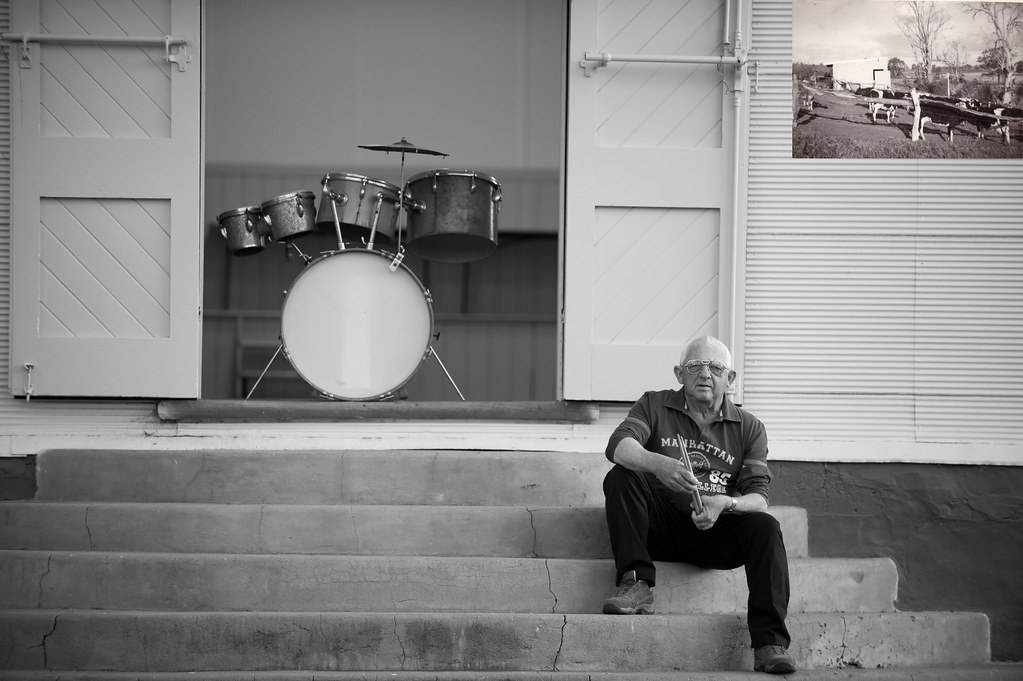
It’s a very small house. When I was thirteen I got this small house from my parents for my drums and all of my instruments. These small houses are named after a Swedish politician named Brigitt Friggebod. The Houses was then called Friggebod and short for that is Friggen. It’s the name of that house, it is a little homage to my childhood and the hours I spent in there completely engrossed in music. Like I find myself now, composing with my synthesizers.
Is this the first time you’ve created music or have you been involved in music prior to FRIGGEN?
I am a college-educated drummer and have played as a freelance drummer in rock, indie, pop, folk, funk, and soul projects. I have written music for two different bands before Friggen. A jazz band named “Forsman Four” and my own band ”Gunnar”. I have also played for many years as a member with the world/kletzmer/Balkan/reggae-band “Apolonia”.
I use Logic Pro X and Abelton Live, for Friggens music I have used a large collection of analog synths. Two different modular systems. An Erica system at INKONST in Malmö, two moog synths and my own Eurorack system.
Every Song except the title song “Naiv. Super.” Wich has upright Piano and Trumpet. Is made by me on my analog synthesizers. Every song except “Naiv. Super.” (Which has trumpet and piano) is made by me on my analog synths. Every snare and kick, bass and melodies Every snare and kick, bass and melody.
When you go into creating a song, what is your process? Do you have a plan in mind? Do you allow a certain instrument in the song to take the lead and work around that?
I look at synths as voices in a choir. I create a patch that becomes a voice. I give that voice a melody. and then I try to get that voice to convey the message in the melody in the best way.
What’s the music scene like in Sweden? Is there a lot of electronic artists, or is there a music scene that is more prevalent than others?
I have my background in acoustic music. so honestly I do not know much about the scene here. I live in a fairly large city and Copenhagen is very close. I have not missed exciting clubs or good DJs or artists to dance to or listen to. But honestly, I do not know.
When people think of Sweden and music, they’ll either point to ABBA, Eurovision or euro-pop. Is that an unfair assumption for people to make?
Absolutely. There is much more depth in the Swedish music soul than Europop. There are incredibly good songwriters in Sweden. And because it is such a cold and dark country, there is a lot of melancholy and sadness in pop as well as in electronic music. Not to mention the metal scene…
They should be transported and get a meditative feeling of being far away or high in the air. Feelings like hope, comfort, and perfect imperfection. It’s in the cracks that the light comes in, right?
It all seems very serene and optimistic – did the landscape in Sweden influence the music you made/you make?
Yes, a lot. The great plains where I grew up, the forests and mountains of Laponia.
Are there other musicians that influence your music (I sometimes get a Sigur Ros vibe from some songs, Royksopp at other times.)
Sigur Ros is definitely an inspiration, múm too. But also Wintergatan, Mokira, Oskar Schönning, 1900 and Klabbes bank.
How important was it that the song titles remained in your native language, rather than translated to English?
It was not that important. I think people know how to translate if they want to. For me, it is important that those who listen acquire their own perception and meaning in the music.
Tell me more about the video for Naiv. Super – who created it? Do you feel it represents the song, and was it important that the video capture the heartfelt nature of the track?
Isabelle Girardon made it. She is a painter and an artist and a good friend of mine. The video is made from animations. Every picture is hand-drawn. It really represents the song. The hopeful spirit of a young soul and the hunger, the drive, and the inspiration a young soul possesses. The video makes one focus on the music and the listener gets to meet “Hon” (Isabelle’s figure she often paints) when “Hon” gets to listen to the song and dreams.
The Creative Process and Studio Setup
Friggen's approach to composition is deeply rooted in the tactile experience of analog synthesis. He describes his studio as a laboratory where each patch is a new experiment. "I often start with a single oscillator and build from there," he explains. "The limitations of analog gear force me to make deliberate choices." His Eurorack system, combined with the Moog synths, allows for a hands-on workflow that digital plugins can't replicate. "There's a physicality to it—turning a knob slightly changes the character entirely. That's where the magic happens."
When asked about his favorite piece of gear, he hesitates. "It changes from track to track. Sometimes it's the Erica Synths modules at INKONST, sometimes my own system. But if I had to choose one, it would be the Moog Mother-32. It's simple but so expressive." He also emphasizes the importance of field recordings, which he often layers subtly beneath the synths. "I record the wind, the rain, the creaking of my house. Those textures add a sense of place, even if you don't consciously hear them."
Live Performances and Visual Art
While Friggen has yet to tour extensively, he has performed a handful of intimate shows in Malmö and Copenhagen. "I prefer smaller venues where the audience is close. My music is quiet, so a seated room works best," he says. His live setup mirrors the studio—a table of synths, a mixer, and a few effects pedals. "I don't use a laptop on stage. It's all hardware, which means every show is slightly different. There's risk, but that's exciting."
Visual art plays a crucial role in Friggen's world. His collaboration with Isabelle Girardon on the "Naiv. Super" video was born from a shared aesthetic. "We both love the intersection of the naive and the profound. Her hand-drawn animations capture the fragility of the music." He hopes to work with more visual artists for future releases, possibly creating a series of short films for each track. "Music and image together can create a deeper emotional resonance. I want to explore that more."
Future Directions and Collaborations
Friggen is currently working on a follow-up EP, which he describes as "darker, more textural, but still hopeful." He's experimenting with vocal samples for the first time, though he remains tight-lipped about the details. "It might not work out, but I have to try. The worst that can happen is I learn something." He also hints at a possible collaboration with a Copenhagen-based string quartet. "I've always loved the sound of strings against analog synths. It's a beautiful contrast."
Despite the solitary nature of his work, Friggen values community. "The electronic scene in Malmö is small but passionate. We share gear, ideas, and sometimes just listen to each other's unfinished tracks. That support is invaluable." He credits the MUZAI collective with giving him the confidence to release music under his own name. "They understood what I was trying to do. That's rare."
Advice for Aspiring Electronic Musicians
When asked what advice he would give to someone starting out, Friggen is thoughtful. "Don't chase perfection. The imperfections are what make music human. And don't buy too much gear at once—learn one instrument deeply before expanding." He also stresses the importance of patience. "It took me years of drumming and playing in bands before I found my own voice as Friggen. Trust the process."
- Start with a single synthesizer and master its capabilities.
- Record everything, even mistakes—they can become the seed of a new track.
- Collaborate with artists from other disciplines to expand your perspective.
- Listen to music outside your genre; inspiration often comes from unexpected places.
He pauses, then adds with a smile, "And remember to take breaks. Go for a walk in the forest. That's where the best melodies come from."